
Comical Laundromat Mishap
题目
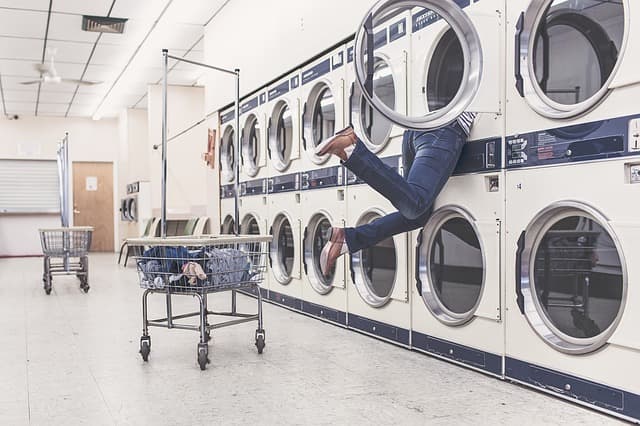
In this picture, what do you think will most probably happen next?
范文答案
Based on this comical and highly unusual scene, several events are likely to unfold in the next few moments. First and foremost, the individual who has climbed headfirst into the upper washing machine is going to realize that they are firmly stuck. They will likely begin to frantically kick and flail their legs in an attempt to find leverage against the slippery metal face of the dryer unit. Since their center of gravity is entirely inside the drum, they will find it extremely difficult to pull themselves backward without external assistance.
Within a minute or two, the noise of their kicking and muffled shouts for help will attract the attention of another patron or the laundromat supervisor, who is probably working in the back office. This bystander will walk around the corner, halt in utter disbelief, and immediately rush over to help. After a brief and highly embarrassing exchange, the rescuer will grab the person by their waist or ankles and carefully pull them out of the circular opening.
Once freed, the individual, looking disheveled and incredibly flushed, will offer a sheepish explanation. They will probably reveal that they were trying to retrieve an expensive item of clothing, like a favorite sock or a delicate piece of jewelry, that had slid to the very back of the deep drum. They will thank the helpful bystander profusely while attempting to brush off their dusty jeans and regain some dignity.
In the end, this bizarre incident will wrap up with a sigh of relief. The embarrassed customer will quickly throw their damp clothes into the laundry cart shown in the foreground, pack up their detergent, and exit the premises as fast as possible to escape further awkward stares.
专家技巧与辅导
理解第 4 题(做出预测)
CELPIP 口语第 4 题要求您观察一幅图片,并预测接下来可能会发生什么。这是一个完全面向未来的任务。与要求字面描述所见内容的第 3 题不同,第 4 题评估您进行推测、安排未来事件顺序以及使用预测性语言构建逻辑叙事的能力。
考官会重点考察情态动词、将来时态以及建立因果关系的逻辑过渡词的使用。您的预测必须基于图片中提供的视觉线索,这意味着它们应该是图片中捕获的当前时刻的合理延伸。
最大化利用您的 60 秒
由于只有 30 秒的准备时间和 60 秒的答题时间,结构效率至关重要。不要浪费宝贵的时间来描述场景,而应直接进入预测。
为了确保想法源源不断,请将您的 60 秒分为三个清晰的逻辑阶段:
- 0-20 秒:预测主角的即时反应和身体挣扎。
- 20-40 秒:预测外部力量或次要角色的出现(例如,帮手、管理人员或意外障碍)。
- 40-60 秒:描述最终的解决方案、情绪反应以及场景的最终结果。这种按时间顺序排列的方法可以防止您无话可说。
熟练掌握将来时态和概率表达
要获得 CLB 9 或更高的分数,您必须展示出词汇和语法的灵活性。避免不断重复 'will' 或 'is going to'。相反,使用高级结构融入不同程度的可能性:
高概率表达方式
- 'It is highly anticipated that...'(非常预计...)
- 'There is a strong likelihood that...'(极有可能...)
- 'He is bound to encounter...'(他注定会遇到...)
- 'The situation is likely to escalate when...'(当...时情况可能会升级)
中等概率/可能性表达方式
- 'She might possibly attempt to...'(她可能会尝试...)
- 'It is conceivable that...'(可以想象的是...)
- 'We can speculate that...'(我们可以推测...)
- 'They could potentially reach out to...'(他们有可能向...求助)
较差与较好的对比示例
- 较差:'The man will get out and he will take his clothes and go home.'(那个人会出来,拿上衣服回家。)
- 较好:'It is highly likely that once the man is successfully extricated from the machine, he will quickly gather his belongings to avoid further embarrassment.'(极有可能的是,一旦此人成功从机器中解脱出来,他会迅速收拾行李以避免进一步的尴尬。)
避免“简单罗列”陷阱:因果关系
一个常见的陷阱是列出缺乏连贯性的零散预测(例如,'一个人会来。衣服会干。灯会灭。')。为了达到高级流利度,请使用因果关系语言将您的预测联系起来。每个预测的行动都应该自然地触发下一个行动。
- 步骤 1(触发因):'Because the person is stuck headfirst...'(因为这个人头朝下卡住了...)
- 步骤 2(引发行动):'...they will inevitably cry out for help.'(...他们不可避免地会大声呼救。)
- 步骤 3(导致结果):'Consequently, this noise will attract the attention of the laundromat manager.'(因此,这个声音会引起自助洗衣店经理的注意。)
通过建立这种链条,您的表达会非常自然,并展示出考官所看重的高水平批判性思维。
用于安排未来事件顺序的过渡词
使用表示时间推移的过渡词来保持叙事条理:
- 'In the immediate aftermath...'(在紧接着的余波中...)
- 'Shortly thereafter...'(此后不久...)
- 'As a direct consequence of this...'(作为此举的直接后果...)
- 'Following this initial struggle...'(在最初的挣扎之后...)
- 'Ultimately, this will lead to...'(最终,这将导致...)
针对视觉猜测场景的词汇扩展
使用精准、生动的词汇可以提升您的语言档次。以下是描述此特定洗衣店事件或类似尴尬处境时的关键术语:
- Extricate(动词):解救,使摆脱脱离。'The bystander will try to extricate him.'(旁观者将试图解救他。)
- Flail(动词):乱动,胡乱挥舞。'His legs will continue to flail in the air.'(他的双腿将继续在空中乱动。)
- Predicament(名词):尴尬的处境,困境。'He will realize the gravity of his predicament.'(他将意识到自己处境的严重性。)
- Sheepish(形容词):因羞愧而尴尬的,局促不安的。'He will offer a sheepish smile.'(他将露出尴尬的微笑。)
- Bystander(名词):旁观者。'An amused bystander will record this on their phone.'(一个被逗乐的旁观者会用手机录下这一幕。)
流利度、节奏和应对突发情况
在第 4 题中,您可能会遇到非常不寻常或抽象的图片。如果是这样,请不要恐慌或过度思考。自然地对待这种荒谬的场景。通过长而有节律的呼吸组说话来保持您的节奏。如果您犯了语法错误,不要停顿或过度重复,只需顺畅地自我纠正或继续说下去。使用自然的过渡词,如 'that is to say' 或 'more precisely',来争取思考时间,而不会降低您的流利度得分。
避免常见的第 4 题错误
1. 描述而非预测
- 较差:'In the picture, a man has his legs sticking out of a washing machine.'(在图片中,一个人的腿从洗衣机里伸出来。——这是第 3 题的描述,在第 4 题中无法得分。)
- 改进:'Looking at the legs sticking out of the washing machine, it is highly probable that this individual will begin to struggle to pull himself backward.'(看着从洗衣机里伸出来的腿,这个人极有可能会开始挣扎着往后退。)
2. 过度推测不相关的背景故事
让您的预测专注于场景中实际发生的事情。不要花 45 秒解释他最初是如何进去的或他的童年经历;请严格专注于该特定房间里接下来会发生什么。
3. 忽视语气
如果图片轻松幽默,您的预测也可以反映这一点。避免预测黑暗、悲剧性的结局(如“机器会启动而他会被淹死”),除非图片明显是一个危险、戏剧性的描绘。保持语气合理且恰当。