
Your cousin is trying to get better at cooking
The Question
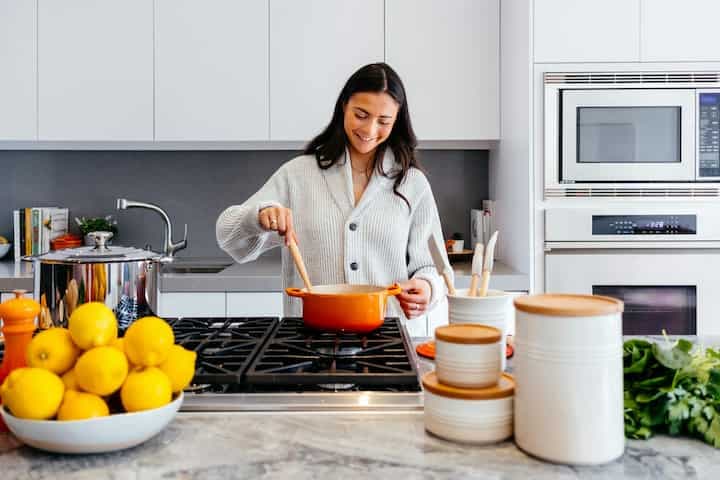
Your cousin is trying to get better at cooking. Give advice on how to improve their skills and experiment with new recipes.
Sample Answer
Hey there! That's awesome that you're getting into cooking and wanting to improve your skills. It's such a rewarding journey, and honestly, anyone can become a great cook with a little practice and patience. I've got a few tips that really helped me when I was starting out, and I think they'll be super useful for you.
First off, I'd definitely recommend starting with the basics. Don't immediately jump into super complicated gourmet dishes. Focus on mastering foundational techniques like knife skills, how to properly sauté vegetables, or making a really good simple sauce, like a classic tomato sauce. You'd be surprised how much you learn about seasoning, heat control, and timing just by getting comfortable with these fundamental dishes. Once you've got a solid grasp of the basics, everything else will feel much easier and less intimidating.
Another really important tip is to embrace experimentation and not be afraid of making mistakes. Cooking is often about trial and error. When you're ready to try new recipes, maybe pick one new ingredient or a different cooking technique each week. For example, if you usually bake, try braising something. Or if you've never used a particular spice, find a simple recipe that features it. Don't worry if a dish doesn't turn out perfectly the first time; that's part of the learning process! Every 'mistake' is just an opportunity to learn what works and what doesn't, and it helps you develop your palate.
Also, make sure to taste your food constantly as you're cooking. This is a game-changer! Don't just follow a recipe blindly. Always taste and adjust seasoning – does it need more salt? A squeeze of lemon for acidity? A pinch of chili flakes for some heat? This practice helps you develop your intuition in the kitchen and truly understand how different flavours work together. It moves you from just following instructions to actually 'cooking' by feel.
Finally, utilize online resources! YouTube is an incredible tool for aspiring cooks. There are countless channels dedicated to teaching beginner-friendly recipes, specific cuisines, or even just individual techniques. Watching someone demonstrate how to chop an onion or debone a chicken can be incredibly helpful. Find a chef or a cooking channel whose style you enjoy, and just follow along. It's like having a personal cooking instructor right in your kitchen.
Honestly, just have fun with it! Cooking should be an enjoyable and creative outlet. I'm really excited for you on this culinary journey, and I'm sure you'll be whipping up amazing dishes in no time!
Expert Tips & Coaching
Understanding This Task
This CELPIP Speaking Task 1 asks you to give advice to a friend or family member (in this case, your cousin) about a specific situation. The key is to deliver your advice in a natural, conversational, and supportive tone, as if you were truly speaking to a loved one. The examiners are looking for your ability to communicate clearly, logically, and fluently in an informal context.
Your response should sound like an authentic conversation, not a memorized speech. You have 60-90 seconds to respond, so aim for a detailed answer that covers several practical tips and explanations.
Use a Warm and Natural Tone
When giving advice to a cousin, your tone should be friendly, encouraging, and empathetic. Avoid sounding formal or academic. Imagine you're actually chatting with them over the phone or in person. This means:
- Sounding genuinely supportive: Phrases like 'That's awesome!', 'I know it can feel a bit intimidating at first,' or 'You've got this!' really help.
- Using natural contractions: 'It's,' 'you're,' 'I've' make your speech sound more authentic.
- Employing conversational fillers (sparingly): Words like 'honestly,' 'you know,' 'I mean,' can make your speech flow more naturally, but don't overuse them.
- Varying your intonation: Don't speak in a monotone. Let your voice express enthusiasm and encouragement.
Weak Example (Too robotic/formal): 'It is advisable to commence with fundamental culinary techniques.'
Better Example (Natural and warm): 'Hey there! That's awesome you're getting into cooking. I'd definitely recommend starting with the basics.'
How to Start Your Response
A strong, conversational opening sets the stage for a high-scoring response. Instead of diving straight into advice, acknowledge the situation and express enthusiasm.
- Start with a friendly greeting: 'Hey [cousin's name]!' or 'Hi there!'
- React positively to their goal: 'That's fantastic that you're getting into cooking!', 'What a great idea!', 'That's awesome you want to improve your skills.'
- Show empathy: 'I know it can feel a bit intimidating at first, but it's so rewarding.'
Weak Opening: 'You should start with basics.'
Improved Opening: 'Hey there! That's awesome that you're getting into cooking and wanting to improve your skills. It's such a rewarding journey, and honestly, anyone can become a great cook with a little practice and patience. I've got a few tips that really helped me when I was starting out.'
Organize Your Ideas Clearly
A well-organized response is easier to follow and demonstrates strong coherence. Aim for a structure like this:
- Warm Conversational Opening: React to the situation positively.
- Advice Idea 1 (with explanation and example): Start with foundational skills.
- Advice Idea 2 (with explanation and example): Embrace experimentation and don't fear mistakes.
- Advice Idea 3 (with explanation and example): Taste and adjust seasoning constantly.
- Advice Idea 4 (with explanation and example): Utilize online resources like YouTube.
- Encouraging Conclusion: Reiterate support and optimism.
Use clear transition words and phrases to move smoothly between your points. This helps the listener follow your thoughts without getting lost.
Detailed Idea Development: Expanding Your Advice
The key to a high-scoring CELPIP response isn't just what advice you give, but how deeply you explain it. For each piece of advice, don't just state it; elaborate on why it's important, how to implement it, and provide a realistic example.
1. Master the Basics
- Weak Advice: 'Learn basic techniques.'
- Better Advice: 'First off, I'd definitely recommend starting with the basics. Don't immediately jump into super complicated gourmet dishes. Focus on mastering foundational techniques like knife skills, how to properly sauté vegetables, or making a really good simple sauce, like a classic tomato sauce. You'd be surprised how much you learn about seasoning, heat control, and timing just by getting comfortable with these fundamental dishes. Once you've got a solid grasp of the basics, everything else will feel much easier and less intimidating.'
- Why it's better: It explains what basics, why they're important (learn about seasoning, heat control, timing), and what the benefit is (less intimidating, easier).
2. Embrace Experimentation & Don't Fear Mistakes
- Weak Advice: 'Try new recipes.'
- Better Advice: 'Another really important tip is to embrace experimentation and not be afraid of making mistakes. Cooking is often about trial and error. When you're ready to try new recipes, maybe pick one new ingredient or a different cooking technique each week. For example, if you usually bake, try braising something. Or if you've never used a particular spice, find a simple recipe that features it. Don't worry if a dish doesn't turn out perfectly the first time; that's part of the learning process! Every 'mistake' is just an opportunity to learn what works and what doesn't, and it helps you develop your palate.'
- Why it's better: It frames 'mistakes' positively as learning opportunities, gives concrete examples of experimentation (new ingredient/technique), and explains the benefit (develop your palate).
3. Taste and Adjust Constantly
- Weak Advice: 'Taste your food.'
- Better Advice: 'Also, make sure to taste your food constantly as you're cooking. This is a game-changer! Don't just follow a recipe blindly. Always taste and adjust seasoning – does it need more salt? A squeeze of lemon for acidity? A pinch of chili flakes for some heat? This practice helps you develop your intuition in the kitchen and truly understand how different flavours work together. It moves you from just following instructions to actually 'cooking' by feel.'
- Why it's better: It emphasizes the importance ('game-changer'), provides specific examples of what to look for ('salt?', 'lemon?', 'chili?'), and explains the skill developed (intuition, understanding flavours).
4. Utilize Online Resources
- Weak Advice: 'Watch cooking videos.'
- Better Advice: 'Finally, utilize online resources! YouTube is an incredible tool for aspiring cooks. There are countless channels dedicated to teaching beginner-friendly recipes, specific cuisines, or even just individual techniques. Watching someone demonstrate how to chop an onion or debone a chicken can be incredibly helpful. Find a chef or a cooking channel whose style you enjoy, and just follow along. It's like having a personal cooking instructor right in your kitchen.'
- Why it's better: It names a specific platform (YouTube), explains what kind of content is useful (beginner-friendly, specific techniques), and provides a strong analogy ('personal cooking instructor').
Rich Vocabulary for Cooking Advice
Using varied and appropriate vocabulary demonstrates your lexical resourcefulness. Here are some terms and phrases you can use:
Starting Out / General Progress
- 'Culinary journey': A descriptive way to talk about learning to cook.
- Example: 'I'm excited for you on this culinary journey!'
- 'Foundational skills' / 'Master the basics': Essential starting points.
- Example: 'It's crucial to master the basics like knife skills first.'
- 'Get the hang of it': Become proficient through practice.
- Example: 'You'll get the hang of seasoning pretty quickly.'
- 'Whipping up': Preparing a meal quickly and easily.
- Example: 'You'll be whipping up amazing dinners in no time.'
Experimentation & Creativity
- 'Flavour profile': The overall taste characteristics of a dish.
- Example: 'Experimenting with spices really changes the flavour profile.'
- 'Culinary adventures': Trying new and exciting dishes or cuisines.
- Example: 'Don't be afraid to embark on some culinary adventures.'
- 'Put your own spin on it': To add your personal touch to a recipe.
- Example: 'Once you're confident, you can put your own spin on classic recipes.'
- 'Unleash your creativity': Encourage artistic expression in cooking.
- Example: 'Cooking is a great way to unleash your creativity.'
Techniques & Sensations
- 'Sautéing', 'braising', 'roasting', 'simmering': Specific cooking methods.
- Example: 'Try braising meat for a tender result.'
- 'Seasoning' / 'Adjust seasoning': Adding salt, pepper, herbs, and spices.
- Example: 'Always adjust your seasoning to taste throughout the process.'
- 'Developing your palate': Training your sense of taste to discern flavours.
- Example: 'Constant tasting helps you develop your palate.'
- 'Intimidation' / 'Intimidating': Feeling nervous or daunted by something.
- Example: 'Don't let complicated recipes be intimidating.'
Encouragement
- 'Practice makes perfect': A common idiom for improvement.
- 'Trust your instincts': Rely on your intuition.
- 'Have fun with it': Emphasize enjoyment.
Enhancing Fluency and Cohesion
Fluency isn't just about speaking fast; it's about speaking smoothly, naturally, and coherently. Here's how to improve:
- Pacing and Pauses: Don't rush. Speak at a moderate pace, allowing for natural pauses to emphasize points or gather your thoughts. This makes you sound thoughtful, not frantic.
- Intonation and Stress: Use your voice to convey meaning. Stress important words (e.g., 'really important tip') and vary your pitch. This prevents a monotone delivery and makes your speech engaging.
- Connecting Ideas: Use a variety of transition words and phrases like:
- 'First off, ...'
- 'Another great tip is...'
- 'On top of that, ...'
- 'Besides that, ...'
- 'What I mean is, ...'
- 'For example, ...'
- 'Honestly, ...'
- 'Finally, ...'
- Avoid Memorized Speech: While practice is good, avoid memorizing full sentences. This often leads to an unnatural, robotic sound. Instead, practice ideas and vocabulary so your response sounds spontaneous.
- Extend Your Answers: Don't stop abruptly. Use phrases like 'You know what I mean?' or 'It's really helpful because...' to naturally extend your response and add detail.
Common Mistakes to Avoid
Understanding common pitfalls can help you avoid them and achieve a higher CELPIP level.
1. Giving Short, Undetailed Advice
- The Mistake: Providing brief, bullet-point style advice without explanation or expansion.
- Why it's a mistake: It doesn't demonstrate your ability to elaborate, explain, and engage in a natural conversation.
- Weak Example: 'Cook more often.'
- Improved Version: 'The more you cook, the more comfortable and intuitive it becomes. Regular practice helps you develop muscle memory for chopping, stirring, and knowing when food is done, which builds your confidence immensely.'
2. Sounding Too Formal or Academic
- The Mistake: Using overly complex vocabulary or sentence structures that don't fit an informal conversation with a cousin.
- Why it's a mistake: It sounds unnatural and can make your response seem rehearsed rather than spontaneous.
- Weak Example: 'It is imperative to acquire fundamental culinary proficiencies prior to attempting intricate gastronomic preparations.'
- Improved Version: 'Honestly, I'd suggest starting with the basics, like really getting good at chopping vegetables or making a simple, delicious sauce before you try anything too fancy.'
3. Repetitive Vocabulary
- The Mistake: Using the same words or phrases repeatedly throughout your response (e.g., constantly saying 'you should').
- Why it's a mistake: It limits your lexical score and makes your speech less engaging.
- How to improve: Use synonyms, rephrase ideas, and employ a variety of sentence structures. For example, instead of always 'you should,' try 'I'd recommend,' 'one thing that really helps is,' 'it's a good idea to,' 'my advice would be to.'
4. Lack of Personal Connection or Empathy
- The Mistake: Delivering advice impersonally, without acknowledging the cousin's feelings or situation.
- Why it's a mistake: It fails to create a natural, conversational tone and doesn't showcase your ability to communicate supportively.
- How to improve: Start with empathy ('I know it can feel daunting'), use 'I' statements ('I think,' 'From my experience'), and offer encouragement ('I'm sure you'll do great').
5. Abrupt or Weak Ending
- The Mistake: Finishing your response suddenly without a natural conclusion.
- Why it's a mistake: It leaves the listener feeling like the conversation wasn't fully rounded out, impacting your coherence score.
- How to improve: Conclude with an encouraging statement, reiterate your support, or express optimism for their journey. 'I'm really excited for you on this culinary journey, and I'm sure you'll be whipping up amazing dishes in no time!' is a great example.
Practice Strategy
- Record Yourself: Use your phone to record your answers. Listen back critically. Does it sound natural? Are there areas where you could add more detail or use different vocabulary?
- Focus on Flow: Practice connecting your ideas with smooth transitions. Don't just list points; make them flow into a coherent narrative.
- Time Yourself: Get comfortable speaking for the full 60-90 seconds. If you're consistently too short, you need to add more detail and explanation to your points. If you're too long, practice being more concise while retaining detail.
By following these tips, you'll be well-prepared to deliver a high-scoring CELPIP Speaking Task 1 response that sounds natural, detailed, and perfectly demonstrates your English communication skills.
Ready to Practice This Topic?
Use our AI-powered tool to record your answer and get instant CLB-scored feedback.
Practice with AI